
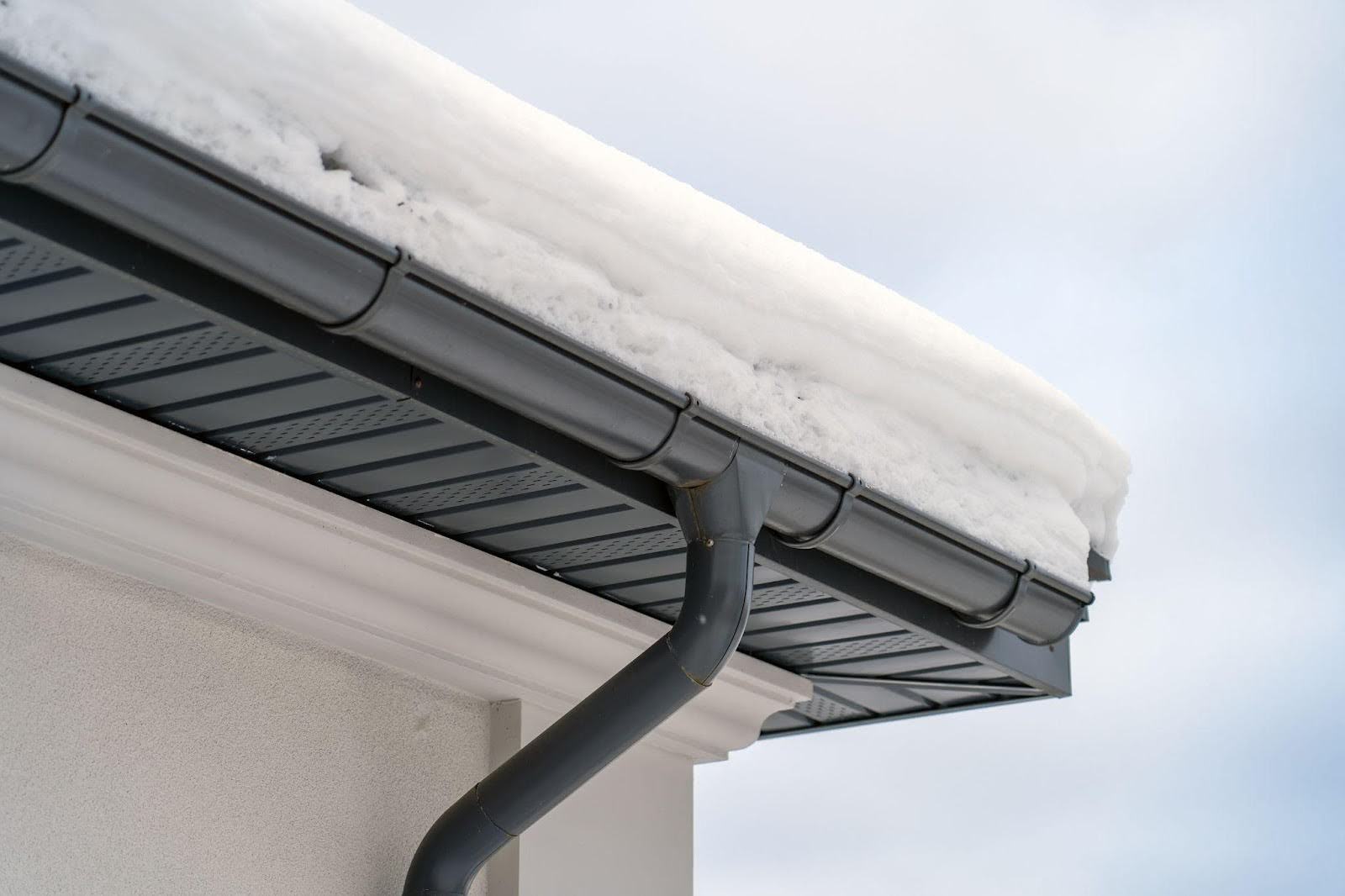
Winter gutter maintenance begins with clearing debris, inspecting for leaks, and ensuring that downspouts drain away from your home. This prep helps prevent overflow when snow on rain gutters begins to melt. Well-prepared gutters reduce water damage risks and help you avoid common winter problems, such as freezing clogs and roofline backups.
Why winter gutter prep matters before the first storm
When the temperature drops, gutters don’t get a break — they get put to the test. Snow on rain gutters weighs them down, and the meltwater may refreeze, creating blockages that push water where it shouldn’t go. That’s why winter gutter maintenance matters before the first big storm hits.
In this guide, you’ll learn how to prep your gutters step by step, what warning signs to watch for, and how to lower the risk of winter damage. We’ll also address a question many homeowners ask: Do rain gutters cause ice dams?
What winter gutter prep is and why it matters
Winter gutter maintenance is the process of preparing your gutters and downspouts to handle snow and freezing temperatures. It includes clearing debris, checking for leaks, tightening loose hangers, and making sure water drains quickly and safely away from your home.
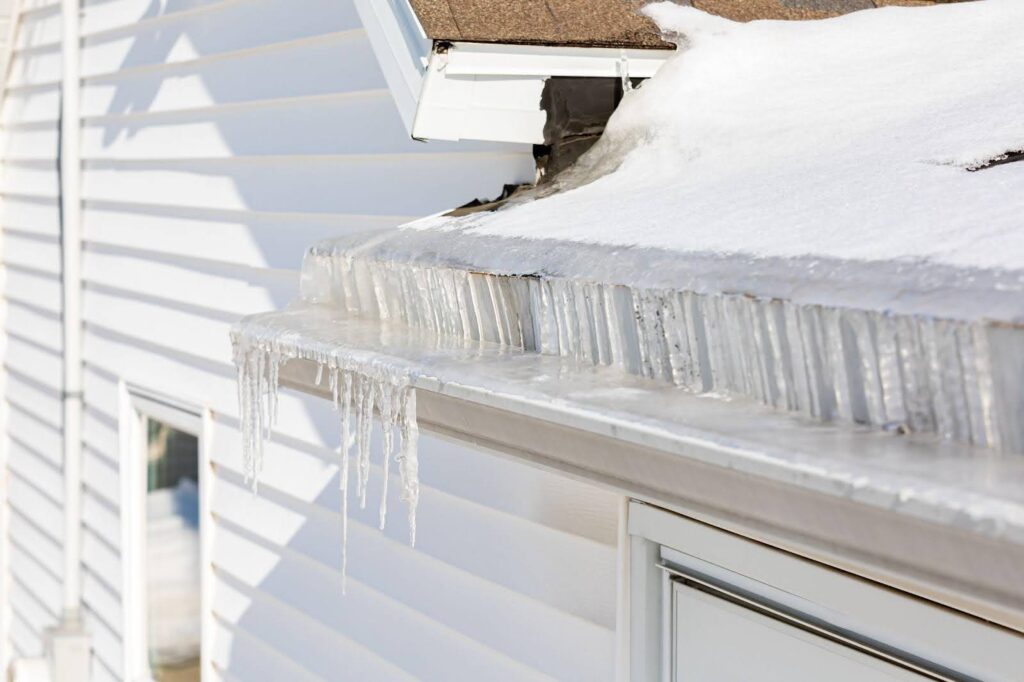
Snow on rain gutters often melts during the day and refreezes at night. When water can’t drain, it often backs up under shingles, spills over the gutter edge, and soaks fascia boards. Over time, this leads to staining, rot, and repairs that cost far more than simple seasonal prep.
Step-by-step plan to prepare your gutters for snow
1. Do a final fall cleanout
Remove leaves, grit, and roof debris so water doesn’t get trapped once freezing temps arrive.
2. Flush gutters and downspouts
Run a hose through the system and confirm water exits quickly and drains away from your foundation.
3. Check for leaks and separated seams
Look for dripping joints, rust spots, and holes, especially near corners and downspout connections.
4. Secure loose hangers and brackets
Tighten fasteners and re-secure any sections pulling away from the fascia.
5. Confirm proper slope
Gutters should tilt slightly toward the downspouts so meltwater doesn’t sit and refreeze.
6. Make sure downspouts drain away from the home
Add extensions or splash blocks to prevent meltwater from pooling near your foundation.
7. Inspect the fascia and soffit for moisture damage
Look for peeling paint, soft wood, or staining, which tend to worsen during winter.
8. Trim branches near the roofline
Removing branches reduces debris buildup and helps prevent heavy, uneven snow from falling onto rain gutters that have been dislodged by branches.
9. Consider debris guards for repeat clog areas
If certain sections clog every year, gutter guards may reduce buildup and make maintenance easier.
10. Do a final water test before the first storm
Confirm water flows cleanly through the system so you’re not surprised after the first freeze.
Examples of how snow may affect rain gutters
A tree-lined neighborhood with frozen clogs
Noticing dripping and staining along the eaves after the first hard freeze, even if the gutters looked fine in early fall, there are most likely leftover leaves trapping meltwater. Once temperatures drop overnight, the water refreezes, blocking the flow. A late-season cleanout and a quick slope check restore drainage and prevent repeat overflow during storms.
Do rain gutters cause ice dams? No, but if they are clogged, they add to the problem.
A foothill home with debris
Foothill areas often deal with wind that blows needles and grit into the gutter channel. Even small debris slows drainage during a melt, increasing the likelihood of water backing up at the roof edge. In this case, a pre-winter inspection, along with a downspout flush, solves the problem before heavy snow arrives.
Benefits of preparing gutters before snowfall
- Reduces the chance of winter overflow that stains siding and damages trim
- Helps protect fascia and soffits from moisture and rot
- Prevents gutters from sagging or pulling away under extra weight
- Improves drainage during freeze–thaw cycles so water exits instead of refreezing
- Lowers the risk of foundation issues caused by meltwater pooling near the home
- Helps you catch small issues early, before they turn into expensive repairs
Common winter gutter mistakes to avoid
- Waiting until after the first storm to clean out debris
- Flushing gutters but skipping downspouts, where clogs often hide
- Ignoring loose brackets and hangers until the gutter starts to sag
- Assuming gutter guards make the system maintenance-free
- Letting downspouts dump water right next to the foundation
- Overlooking early warning signs like staining, drips, or peeling paint near the roofline
Winter gutter stats and research
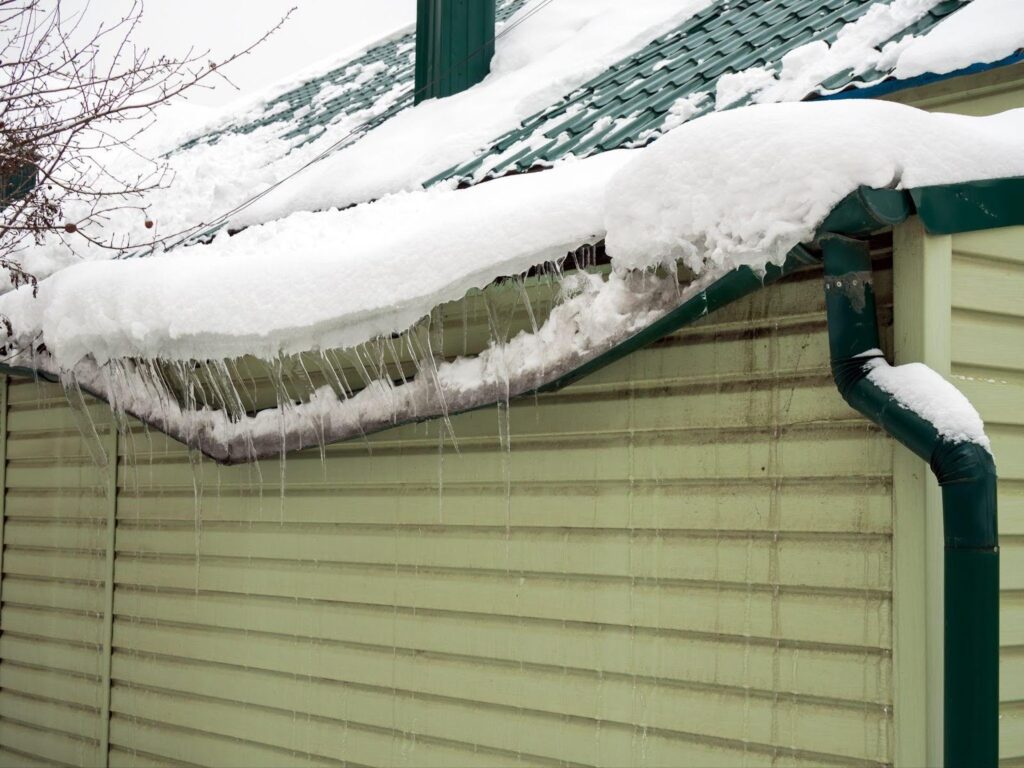
The National Weather Service explains that snow melts during the day and refreezes overnight at the roof edge, allowing water to seep back under shingles and into the home.
The Insurance Information Institute shows “water damage and freezing” makes up a large share of homeowners’ property losses (around a quarter in recent years).
Building science guidance explains that when you don’t carry roof runoff away from the home, water saturates the soil near the foundation and leads to moisture, mold, and durability issues.
Recommended tools for winter gutter prep
You don’t need fancy gear to get your gutters ready for snow, but the right tools make the job faster and safer. These basics help you clear debris, check drainage, and handle small fixes before freezing weather locks problems in place.
- Ladder with a stabilizer
- Work gloves
- Plastic gutter scoop or small plastic trowel
- Garden hose with a gentle spray nozzle
- Bucket, tarp, or debris bag for cleanup
- Screwdriver or drill for tightening loose hangers
- Gutter sealant for small leaks
- Downspout extensions or splash blocks
- Soft-bristle brush for clearing surface debris
FAQs
Q1: When should I prep my gutters for snow?
Aim for late fall, after most leaves drop but before the first major storm. This timing helps you clear debris, check drainage, and fix small issues before freezing temperatures lock problems in place.
Q2: Do rain gutters cause ice dams?
Not usually. Ice dams form when heat melts snow higher on the roof and water refreezes at the colder edge. Gutters may worsen symptoms if they trap water, but attic insulation, air sealing, and ventilation drive the root cause.
Q3: What are the biggest warning signs that gutters are not winter-ready?
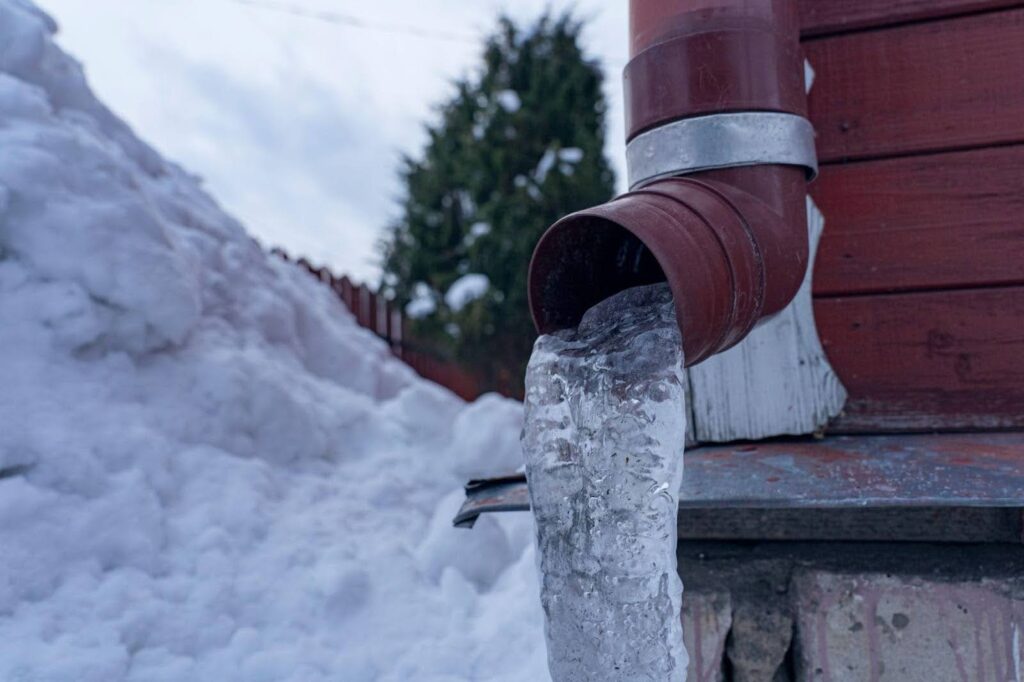
Look for sagging sections, water stains on fascia, loose brackets, leaking seams, and downspouts that drain slowly. If water does not move freely during a hose test, it is likely to freeze and back up once temperatures drop.
Q4: Should I remove snow on rain gutters?
In most cases, no. Focus on keeping the gutter system clear and draining before winter. If you notice heavy buildup causing visible sagging or detachment, that is a safety concern and a good time to call a professional rather than climbing a ladder in winter conditions.
Q5: Do gutter guards eliminate winter maintenance?
They can reduce debris entering the gutter, but they do not eliminate the need for upkeep. Fine material may still accumulate on top, and downspouts can still become clogged.
Get your gutters ready for snow with Wasatch Rain Gutters
A little prep before winter prevents leaks, stains, and costly repairs later. If you need help with winter gutter maintenance, Wasatch Rain Gutters will clean and inspect your system, handle repairs, ensure proper drainage, and recommend options like gutter guards to prevent recurring clogs.
Request a free quote from Wasatch Rain Gutters today, and we’ll help you prepare for the next storm.
Comments are closed